FORAGING
Friday evening, 8:37 PM. The Ralphs parking lot spreads as an ocean of asphalt, each space demarcated by yellow paint already fading. He has parked in the same row for six years, four spaces in from the cart corral. The automatic doors hesitate before opening, then admit him into the air conditioning, which is calibrated to exactly sixty-eight degrees. Avicii's "Wake Me Up" plays from the speakers above the produce, the vocals tinny and compressed, fighting against the hum of refrigeration units. He recognizes the song. He likes it.
The Whole Foods sits directly across the street from his apartment complex, a three-minute walk if he wanted. The Aldi is twelve minutes south on Genesee, and a complete grocery run there would cost him forty percent less than what he is about to spend at Ralphs. The Trader Joe's, the Food-4-Less, and the 99 Ranch Market are all within a fifteen-minute drive. He has never been inside any of them. He drives the almost thirty minutes to Ralphs every Friday, against traffic on Balboa, the way someone visits a relative he is fond of. Less inferior than unapproachable, the Whole Foods is a store that requires a labor he is unable to perform. The fifteen varieties of single-origin olive oil, the small sign listing the farm where the eggs were laid, the employee in the apron handing out samples and explaining the difference between two indistinguishable yogurts all presuppose a shopper who has agreed to spend cognitive labor on the differential between products. The Trader Joe's fails him for the opposite reason by asking him to find pleasure in a quirk he cannot read. The hand-lettered chalkboards, the Hawaiian shirts on the clerks, the products renamed for whimsy (Trader Ming's, Trader José's, the Speculoos cookie butter, the Everything But the Bagel seasoning) present a wall of references he is being asked to find charming. The store is performing a personality at him, and the performance requires him to perform back, to register the wink, to understand that the cracker is funny. He recognizes none of the products and he spends over 20 minutes trying to figure out which aisle contains the milk.
Ralphs makes no demands of him at all. There is nothing in Ralph's that is implied, nothing held just out of reach, no atmosphere that requires deciphering. There is a "peanut-butter aisle." Thriving in this glacial brightness, the overhead lights emit a frequency (roughly 5500 Kelvins) at which everything appears more real than real. The red on the Hormel can achieves a saturation impossible in daylight. The condensation on the frozen-food doors forms perfect droplets, each a tiny lens magnifying the products behind. Under this illumination a strange democracy emerges. The thirty-dollar prosciutto di Parma and the three-dollar
The store operates on the principle of overwhelming abundance. Seventeen varieties of sandwich bread. Forty-three breakfast cereals. An entire wall of yogurts differentiated by fat percentage, fruit mix-in, probiotic strain,country of origin. He moves through the excess on the route his feet have learned, approaching the chili first and scavenging twelve cans of Hormel for his Sunday ritual. His reflection appears in the foggy glass of the freezer reserved entirely for Stouffer's lasagna; four boxes of the same brand his mother kept in her freezer in 1996 (the taste of which has not changed in any way he can detect) enter his cart. Upon his arrival in the snack aisle for plain Ruffles (family size), he decides to buy not two but three bags this week. The dairy run yields six packs of Yoo-hoo; he has tried other chocolate-milk drinks and they were not Yoo-hoo.
In the breakfast aisle he pauses: boxes of instant oatmeal in flavors that bear no relationship to their named fruits line the shelves from floor to ceiling from Wild Berry, which contains no berries, to Peaches & Cream, which involves neither peaches nor cream. His hand reaches for Maple & Brown Sugar. Neither the maple tree tapped in Vermont nor the sap boiled through winter nights exists in the box. Inside the box: corn syrup solids, natural flavor, caramel color. What persists nonetheless is not maple exactly, but the memory of the idea of maple, a third-order simulation that has forgotten its original, liberating the oatmeal from disappointment. No one opens the packet expecting actual maple syrup. The product delivers what it promises, which is one hundred sixty calories of quick-cooking oats with a sweet brown flavor. The box goes into his cart.
In the canned-tuna aisle, an older man stands for forty seconds in front of the StarKist Tuna display, conducting an internal calculation about sodium and mercury. A woman in yoga pants two aisles away fills her cart from a list on her phone, each item checked off with a small satisfaction her cart will radiate at the cashier. A father with a toddler in the seat reads the unit-price stickers below the shelf. The figure of the modern shopper is the figure whose food is the portrait of her self.34 Every cart that passes him is a portrait the cart's owner is currently composing. His cart is twelve cans of chili stacked on top of two family-size Ruffles.
Across the city, the most refined operators of this system are at work. They are queueing for three hours outside a restaurant that serves only toast. Sourdough cultured from wild yeasts captured in Big Sur, topped with avocado varietals no one has heard of, finished with pink salt harvested by third-generation salters in Pakistan. The meal costs forty-seven dollars. Each bite is photographed and uploaded; the captions referencing Proust and gluten sensitivity in the same sentence. The avocado toast, the kale crunch bowl, the seventeen-dollar smashburger, the hand-rolled bagel from the bakery in Lower Manhattan are each a small ideology served at a particular price. The Pac Sun Avant Garde walks past the toast with the same step he walks past the bologna. He has never entered the system in which a meal is a portrait, and the portraits accordingly fail to assemble around him.
In the produce section he picks up a bag of baby carrots labeled Triple Washed! Ready to Eat! The washing happened in Bakersfield, where industrial machines sprayed chlorinated water across tons of carved orange cylinders. Baby carrots are regular carrots lathed down to uniform size, their skins removed, their irregularities erased; they do not exist in nature. He puts the bag in the cart on top of the Stouffer's. The cart fills along no organizing principle except frequency of use, items accumulating like sediment at a river delta, the heaviest deposits at the bottom and the most recent on top.
At checkout the total reaches one hundred ninety-seven eighty-two. He pays with the credit card. The machine prompts him to sign on the screen and he signs without looking. The teenage cashier says "Have a good one" to the space he recently occupied; he is already moving toward the exit. In the parking lot, loading the bags into the trunk of the Toyota Yaris, the evening light catches the half-gallon of 7Select milk he bought three nights ago, still in the car, forgotten. The milk has spoiled in the heat. He places the new groceries around the old jug.
On the way home, the Del Taco drive-thru. He has eaten the Double Del Cheeseburger maybe three hundred times in his adult life, and the prospect of eating one tonight has been with him quietly since the third aisle of Ralphs. He orders, and the contradiction (a burger at a taco chain) does not register as such; it registers as the burger he came for. While he waits, he watches other cars cycle through the drive-thru. The burger arrives wrapped in yellow paper, inside a bag, inside a second bag.
The forager's path in the literature is not the straight line the supermarket assumes; his are long stretches of short local steps punctuated by rare, disproportionately large jumps in arbitrary directions, the jumps statistically uncorrelated with anything that preceded them.35 The jumps are real and they are unpredictable by design. One Tuesday his cart contains a jar of pickled herring he has never eaten and will not eat again.
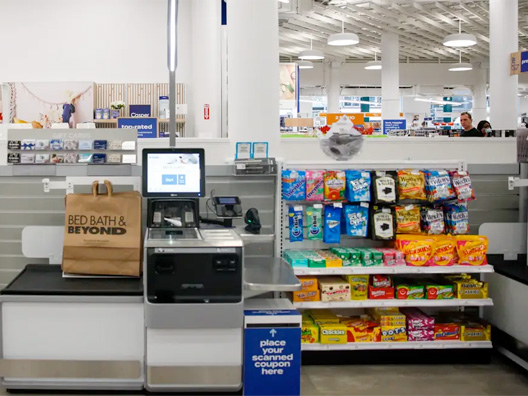
Halfway home he remembers the Toblerone chocolate that he craved, vaguely, for a week. He pulls into the Bed Bath & Beyond off Friars Road. The store is mid-clearance, the lighting still bright, employees walking past pallets that have not been unpacked in some time. At the register endcap, between a display of compression socks and a cardboard tower of scented candles, sits a small wire rack of Toblerone bars at $4.99 each.
To observe these anomalous food products situated outside their logical retail taxonomy (the $8.99 beef jerky adjacent to the Home Depot checkout, the pasta at Ross Dress for Less, the vacuum-sealed smoked salmon positioned near the printer ink at Office Depot) is to glimpse the physical infrastructure of his metabolism. These displaced commodities operate on a highly specific, almost spectral demographic premise that he perfectly embodies. To watch him shop is to watch the collapse of behavioral economics, of consumer psychology, of the entire apparatus of attention research that distinguishes a primary purchase from an impulse buy. The apparatus assumes a subject who can be diverted, persuaded, or upsold. He is none of these. He nullifies the research by failing to obey its logic. When he acquires the chocolate bar at Bed Bath and Beyond, he actively closes an economic circuit by obfuscating spontaneity and deliberation. His gesture provides an entire network of distributors, brokers, and category managers with the exact feedback necessary to maintain and reproduce their own spatial logic. Once more, his desire is productive.
At home he puts the groceries onto the counter and opens the refrigerator to find space for them. Stacked along the bottom shelf, four unopened Home Chef boxes, the ice packs inside long since thawed and refrozen by the cycling of the compressor. He signed up in 2022, after a coworker mentioned it at lunch, attempted the first kit (a lemon-herb chicken with farro), abandoned it halfway through when a step required a kitchen tool he did not own, and has not cooked from a kit since. The shipments arrived weekly. He did not cancel the subscription, since canceling would have required logging into the account, and he had not retained the password. Eventually he wrote the company an email and the shipments stopped. The four boxes that arrived before the expiration are still there.
He eats the Double Del at the counter, standing, not bothering with a plate. The wrapper is the plate. The counter is the table. By the time the burger reaches him, the cheese has melted into the meat, the pickles have released their brine into the bun, the whole assembly has compressed into something dense and particular.
On other nights of the week, the routine he has developed for himself plays out. Tuesdays are hot-dog night. He opens a package of Oscar Mayer hot dogs and places three in a small pot of water, the way his father did in Riverside, CA in 1993. While they boil, he eats baby carrots out of the bag he does not bother to wash. The hot dogs go onto white bread with no condiment and the water sits in the pot for three days. Wednesday nights are different: a microwave Pop-Tart, sometimes two, eaten standing at the counter with Spam fried in a pan and pushed onto a tortilla; or instant ramen with a Kraft single melted into the broth. Thursdays sometimes a Hot Pocket, sometimes a Bagel Bite tray, sometimes the Lunchables he buys for the small pleasure of unsealing each compartment. The week's eating includes the most primitive form of consumption (raw sushi-grade tuna eaten cold from the paper wrapping, an apple, a handful of dry cashews) alongside the most industrially processed foods available (cheese product from an aerosol can, Vienna sausages eaten directly from the tin, Hawaiian Punch straight from the bottle). His liking does not differentiate the two registers. Both are foods he has come back to for years.
The Hot Pocket goes into the microwave for two minutes and is taken out with fifty-two seconds left on the counter; two minutes is what the box says but the stomach says otherwise. He has located, on the shelves of every store on his route, the foods he eats, and he moves across the landscape on routes that do not require navigation, the way a man walks the rooms of his own apartment. The supermarket is full of intention and his motion through it adds none of its own.36
René Redzepi at Noma in Copenhagen sends his staff out onto the Danish coastline at dawn to gather what is edible: sea buckthorn, beach mustard, the lichen growing on a specific kind of stone.37 The diners pay roughly seven hundred fifty dollars for the meal that results and wait years for the reservation. The condition Redzepi is engineering, at this expense, is the condition of eating without the apparatus of recognition between the eater and the food, of being returned to the prelinguistic encounter with what the landscape happens to offer. The condition his kitchen is engineering is the condition the Pac Sun Avant Garde's Tuesday already has.
This rhymes with the original human relationship to food: foraging. The pre-agricultural human moved through the landscape eating what was edible and walking past what was not, the catalogue of edibility passed down through generations, supplemented by habit and instinct. He forages through commercial space along routes that have already been read. The signs that scream SALE or NEW or LIMITED TIME address a buyer who is still being courted. The courtship has already concluded in him. To him, these are poisonous plants.
Three nights later, the milk runs out. 2:47 AM and he drives the eight blocks to the 7-Eleven on the corner of Genesee and Balboa Ave. The electronic chime announces his entry into fluorescent eternity. Behind the register, the night cashier sits hunched over his phone playing a mobile game with aggressive sound effects. Swords, coins, a level-up fanfare. He does not look up. The Pac Sun Avant Garde nods at him anyway. The cashier and he have not exchanged words in the entire history of their nightly encounters. The nod is the relationship. The relationship is sufficient.
He moves through the store on the route his feet have learned. The dairy case occupies the back wall, forcing customers to traverse the entire floor, what marketing textbooks call the golden path. The principle assumes a customer who has not yet committed and might be diverted by the displays along the way. He passes the Hostess endcap, the wall of energy drinks, the stale sprinkled doughnuts that have been resting in a plastic case since noon yesterday. The rotating hot dogs turn under their heat lamp the way they have turned every night for six years.
It is increasingly fashionable, on the regions of the internet that produce fashion, to insist that this store is a degraded version of its Japanese counterpart. The discourse has solidified around a recurring caption: American 7-Elevens could never.38 The Japanese konbini, in the videos that circulate, contains pristine aisles of onigiri, fresh sushi, the famous egg sandwich, high-quality ready meals. The American 7-Eleven contains rotating hot dogs and nacho cheese dispensers and microwave burritos. The hierarchy is clear, and in the hierarchy the American store is the place of last resort, of neglect, of desperation. The Japanese store is the destination.The hierarchy is a piece of cultural capital, and the cultural capital is the function of the hierarchy. The Pac Sun Avant Garde is indifferent to it because the store on Genesee and Balboa is, for him, his store. The konbini in Shinjuku is not better, the way a friend's apartment is not better than your own.
He reaches the cooler, the glass is clouded from the handling of every previous customer, and takes a gallon of 7Select Milk39. He has tried other milks during periods when the 7Select shelf was empty. They were the wrong milk. He returned to the 7Select on his next trip with mild relief, the way one returns to a familiar bed after travel. At the register the cashier looks up briefly, runs the jug across the scanner, mutters the total at the screen between him and the doors.
Outside, the parking lot is empty. The sign hums above the door. The bag with the milk swings against his hip as he walks to the car. He drives the eight blocks home in the dark, pours an inch of milk into a glass at his kitchen counter, and drinks it standing up. Tomorrow he will be hungry again, and he will know what to do.